FinOps for AI

The same AI task can cost 50× more than it should.

Most teams ship their first LLM feature on a flagship model with zero optimization — then watch the bill scale linearly with usage. I find the waste and cut it, usually by 50–95%, without touching quality.

// Independent & model-agnostic — OpenAI, Anthropic, Google, open-weight

One support chatbot. 1M chats/mo.

Identical task — the only variable is model choice & optimization.

~$500
~$15,450
~$25,750
Optimized & routed~$500
Flagship, no optimization~$25,750
The gap is your opportunity≈ 50×
Modeled across Customer support / RAG · Doc summarization · Code generation · Self-hosting TCO
Why it matters

Your AI bill isn't set by your provider. It's set by your choices.

Token price is one input among many. Architecture, model tier, caching, and batching swing the real cost far more than which logo is on the invoice — and almost nobody is measuring it.

01

Spend is invisible

Token costs hide inside cloud bills and feature teams. Without per-workload visibility, waste compounds silently as you scale.

02

Flagships everywhere

Teams default the hardest model to every request — including the 70% of traffic a model 20× cheaper would answer just as well.

03

Discounts left on the table

Caching, batch tiers, and routing routinely cut 50–95% — but only if they're designed in. Most stacks use none of them.

The method

How a token bill gets cut by ~95%

A repeatable sequence on a high-volume workload (1M docs/mo). Each step compounds on the last — the discounts multiply.

Right-size the model

Move off the flagship to a fit-for-task tier and route by difficulty.

$22,500 → baseline

Cache the stable prefix

Reuse system prompts & context across calls — up to 90% off cached input.

−90% input

Batch what can wait

Move latency-tolerant jobs to async batch tiers for a flat discount.

−50%

Verify & monitor

Lock in the savings with measurement and price-change alerts.

≈ $900/mo
The framework

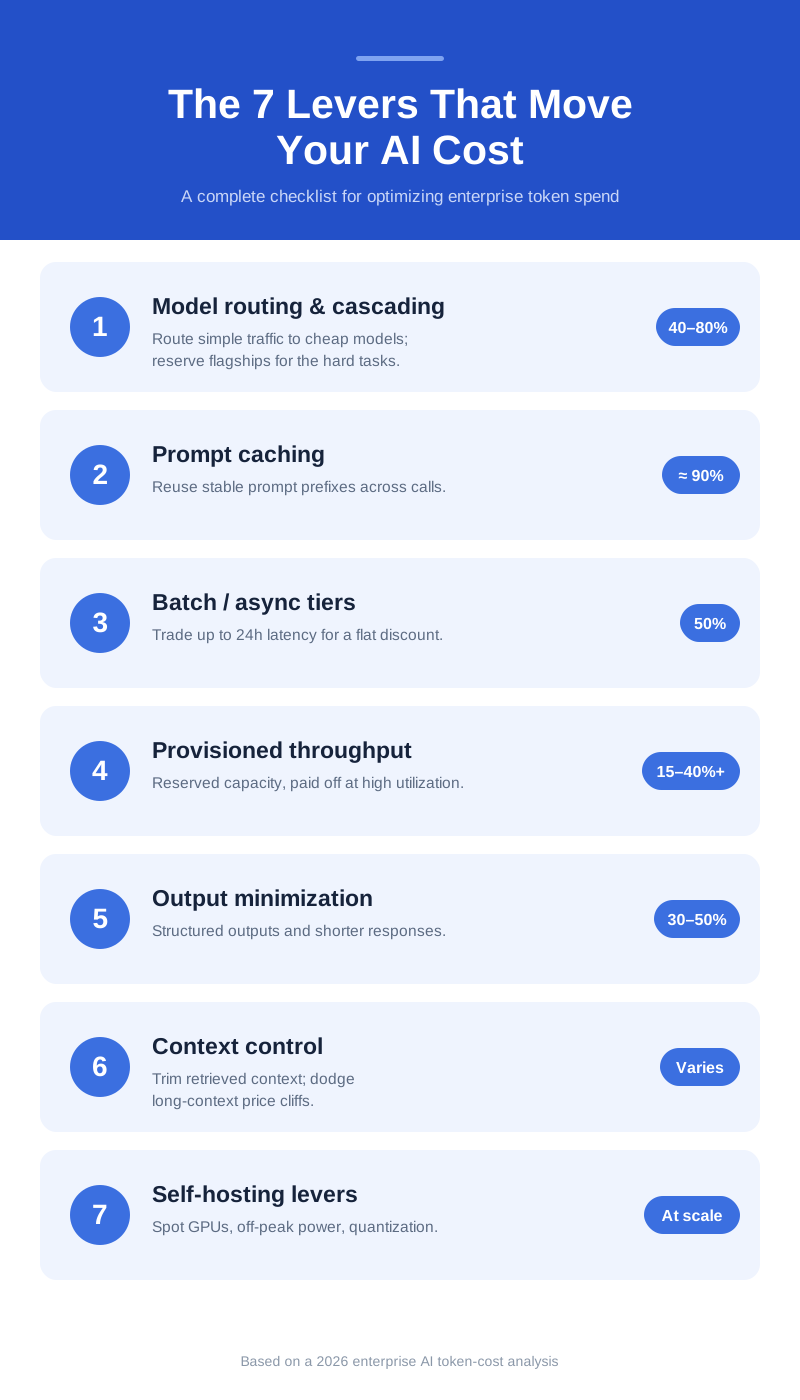
Seven levers move every AI cost.

Cost optimization isn't one trick — it's a system. These are the seven levers I work through on every engagement, in priority order, against your actual workloads.

The 7 levers that move your AI cost: model routing, prompt caching, batch/async tiers, provisioned throughput, output minimization, context control, and self-hosting.

// The 7 levers — full framework

Find out where you sit on that 50× range.

A fixed-scope cost audit maps your real per-workload token spend and hands you a prioritized savings roadmap — typically paying for itself many times over.

Book a cost audit